
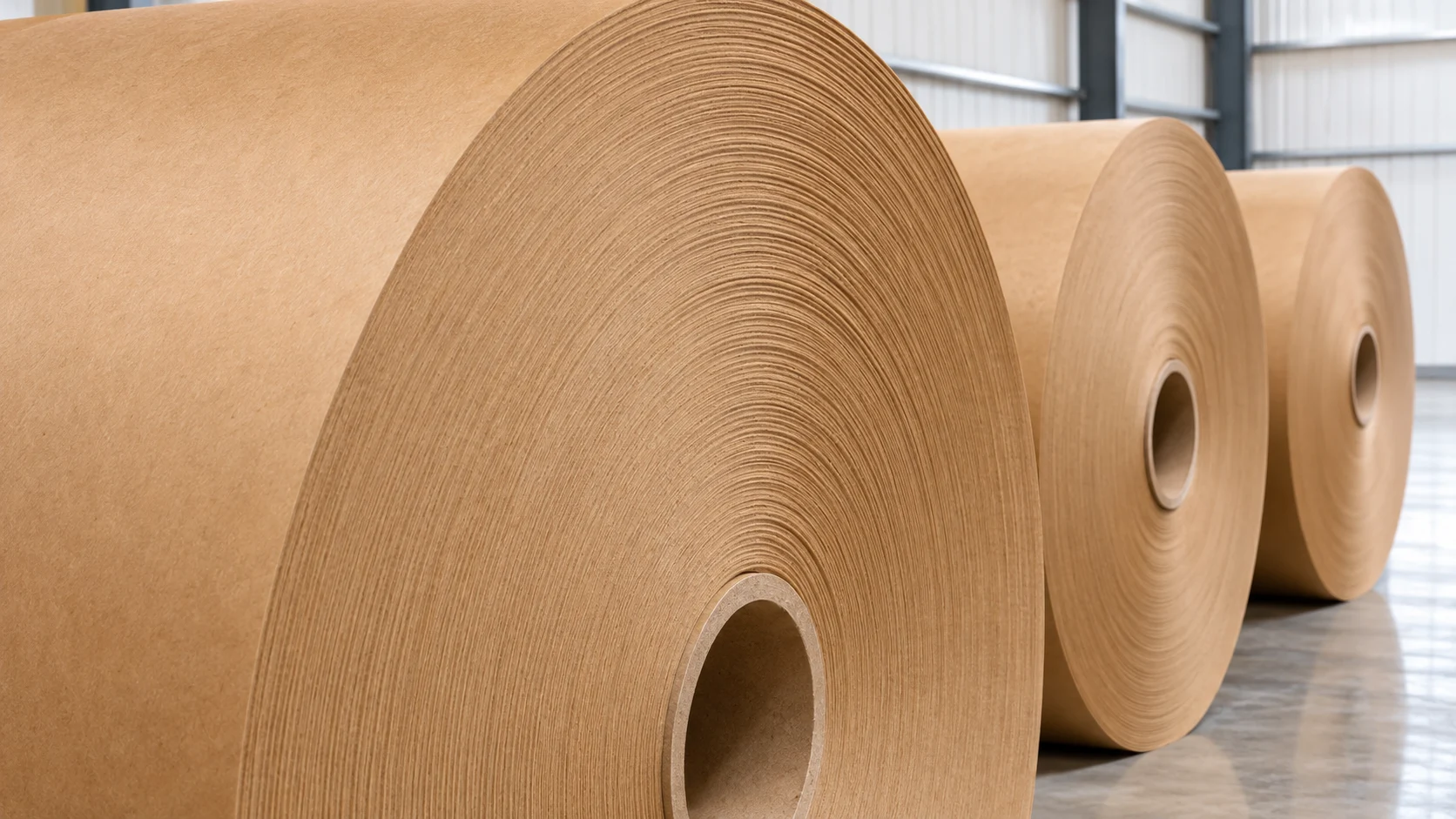
Original AI-generated paper-reel illustration; not a photograph of supplied stock.
Start with the packaging job
Paper and board selection should begin with the finished package: what it holds, how it is printed or converted and how it will be handled. A folding carton, a corrugated pack and a printed insert are different requirements. A request for a paper weight alone leaves the supplier without that context.
For a Bangladesh converter, include the current approved reference if available, the intended pack format and the quality checks used by your customer. Identify whether the enquiry is for a reel, sheet or a particular converting requirement.
Distinguish GSM from thickness
Grammage describes mass per unit area, commonly expressed as grams per square metre or GSM. Thickness, also called caliper, is a separate measurement. ISO 536 covers grammage, while ISO 534 addresses thickness, density and specific volume. Record the test method for each property you compare.
Use that distinction when comparing offers. Record the supplier’s specified grammage, thickness, stiffness values, units and test methods where relevant. Do not assume that equal GSM means equal thickness or that either value alone proves the pack will perform as required.
Specify printing and converting requirements
Describe the printing process, surface requirements, cutting, creasing, folding, gluing or other conversion steps. Ask your production team to identify the defects that would make a material unacceptable, such as an unsuitable surface result or a problem observed during a converting trial.
A useful trial includes the finished pack, not only an unconverted sheet. Keep sample identity, machine settings and the agreed acceptance results together. If the material changes, decide which parts of that evaluation need to be repeated.
Address handling and end-use documentation
Tell the supplier about the relevant storage, transport and use conditions. Ask for handling guidance for the proposed grade and packing format. If the pack has a specific contact or customer requirement, request documentation for the exact board and intended application.
Avoid treating a supplier’s general environmental or product statement as evidence for every grade. Verify any certification or claim through the relevant documents and the requirements of your own customer.
Compare yield and usable material
Place offers on the same size, quantity and delivery basis. Assess how the proposed sheet or reel dimensions fit your converting plan and record the waste observed in a representative trial. The lowest price per ton may not be the best comparison if the cutting plan or accepted output differs.
Send ECHO the board or paper reference, dimensions, application, volume and trial needs. The paper-and-board market page can help organize enquiries for cartons, corrugated applications, printing and industrial converting.
Buyer checklist
- Finished packaging format and end use
- Grade reference, GSM, caliper and relevant performance values
- Sheet or reel dimensions and converting process
- Customer documentation and handling requirements
- Trial acceptance, expected volume and delivery destination
Frequently asked questions
Does higher GSM always mean a stronger package?
GSM alone does not establish package performance. Review the board’s relevant properties, package design and results from the intended converting and use conditions.
Are GSM and caliper the same?
No. GSM expresses mass per area; caliper expresses thickness. Compare both where relevant to your application.
What dimensions should a paper enquiry include?
State the required sheet or reel dimensions and any converting constraints, together with the grade, quantity, application and delivery requirements.
Sources and further reading
Discuss your material requirement.
Share the application, specification and quantity with our team.
This article provides general guidance. Verify technical specifications and requirements for your material, grade and destination before purchasing.
← Back to Industry Insights